Frequently asked questions
How can I tell whether I have a boiler or a furnace?
FURNACE SYSTEM
Heats air through ductwork and vents
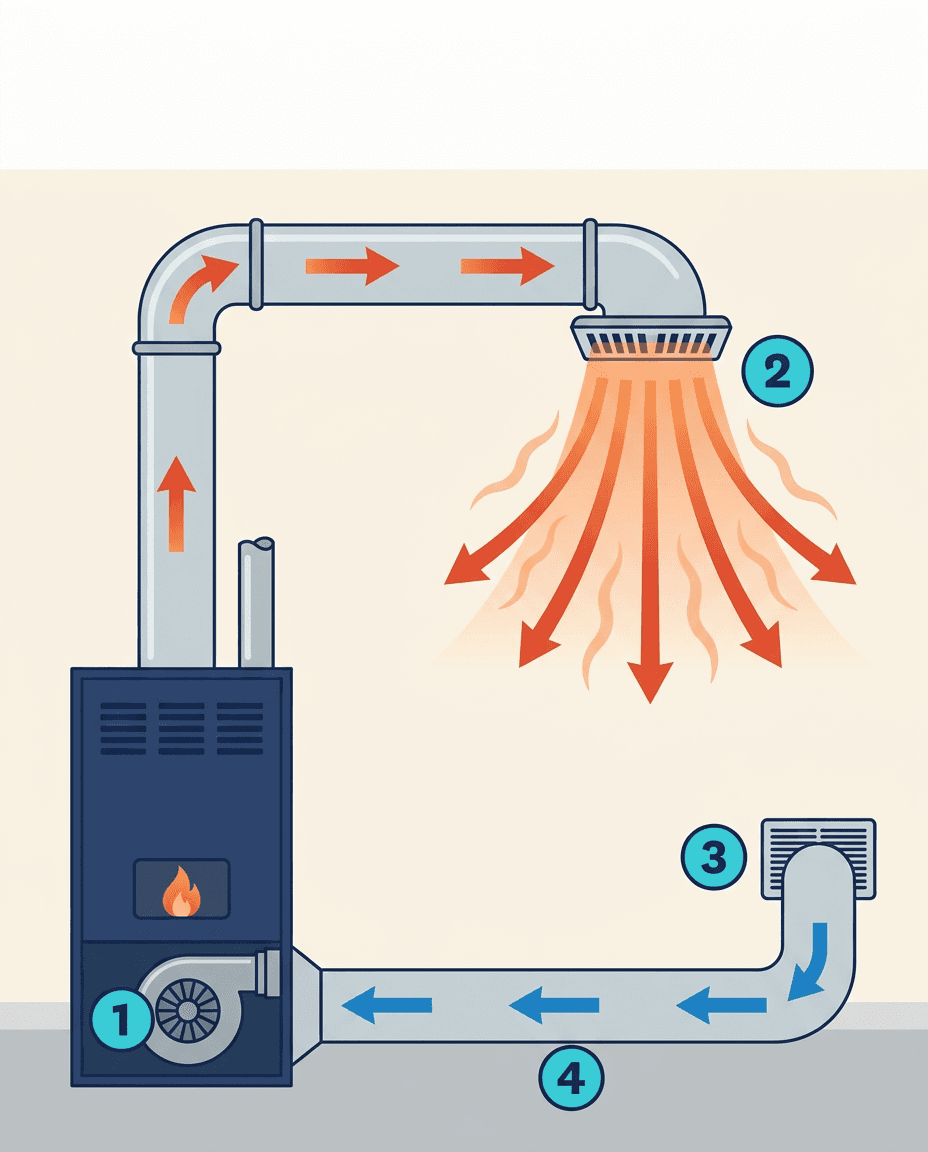
- Blower pushes air through the system
- Warm air out heated air enters the room through the vent
- Cool air room air is pulled in at the grille
- Air return carries cool air back to the furnace to be reheated
HOT WATER BOILER SYSTEM
Hot water heating, in plain English
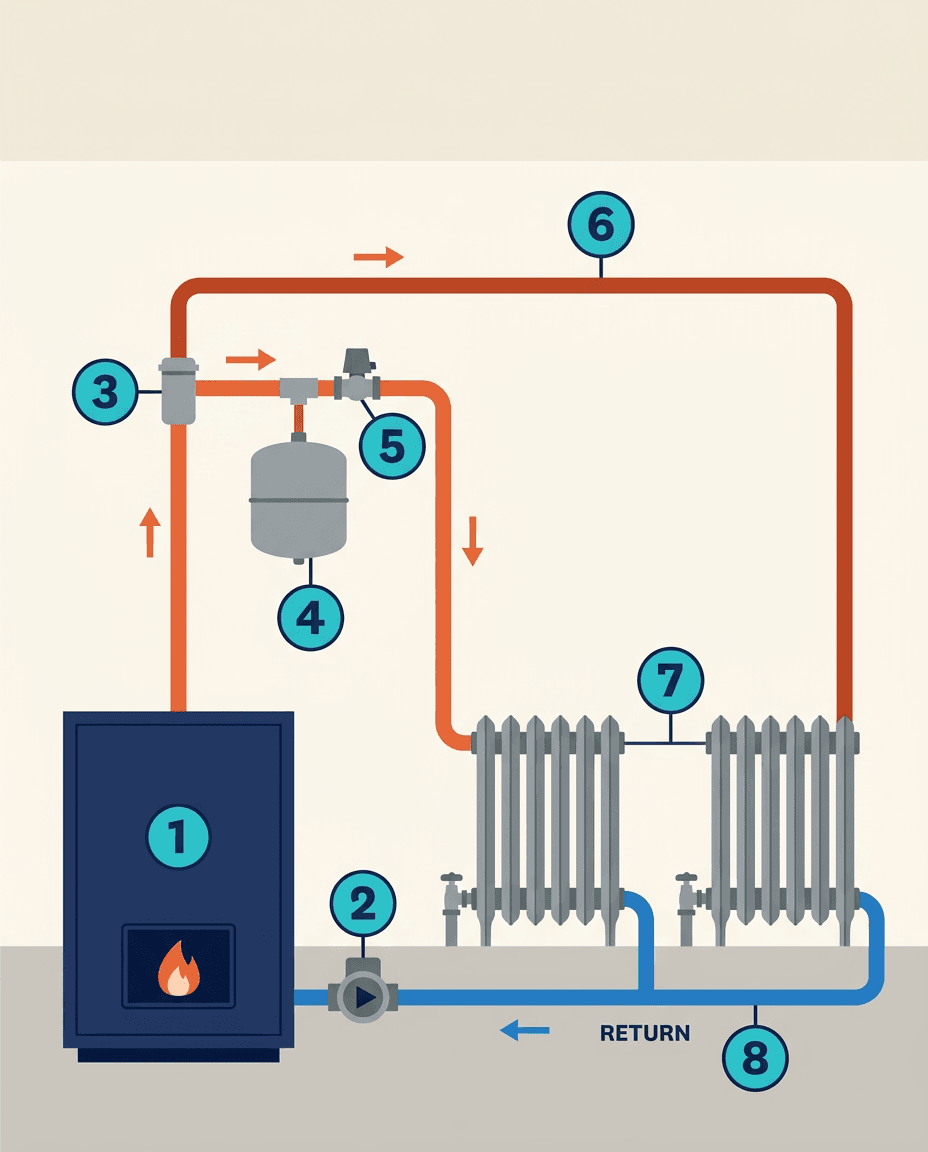
- Boiler heats the water
- Circulator pump keeps the water moving
- Air separator pulls air bubbles out of the water
- Expansion tank gives the water room to expand
- Zone valve opens to send heat to one area
- Supply pipe carries hot water to the rooms
- Radiator gives off heat into the room
- Return pipe brings cooler water back to the boiler
Quick check
A furnace heats air and blows it through vents in your floors, walls, or ceilings. A boiler heats water and sends it through radiators or baseboard heaters. Quick check: if warm air comes out of vents, you have a furnace. If you have radiators, you likely have a boiler. Sanchez HVAC Services services furnaces, heat pumps, and boilers, so either way we can help.
How often should I have my HVAC system maintained?
The short answer
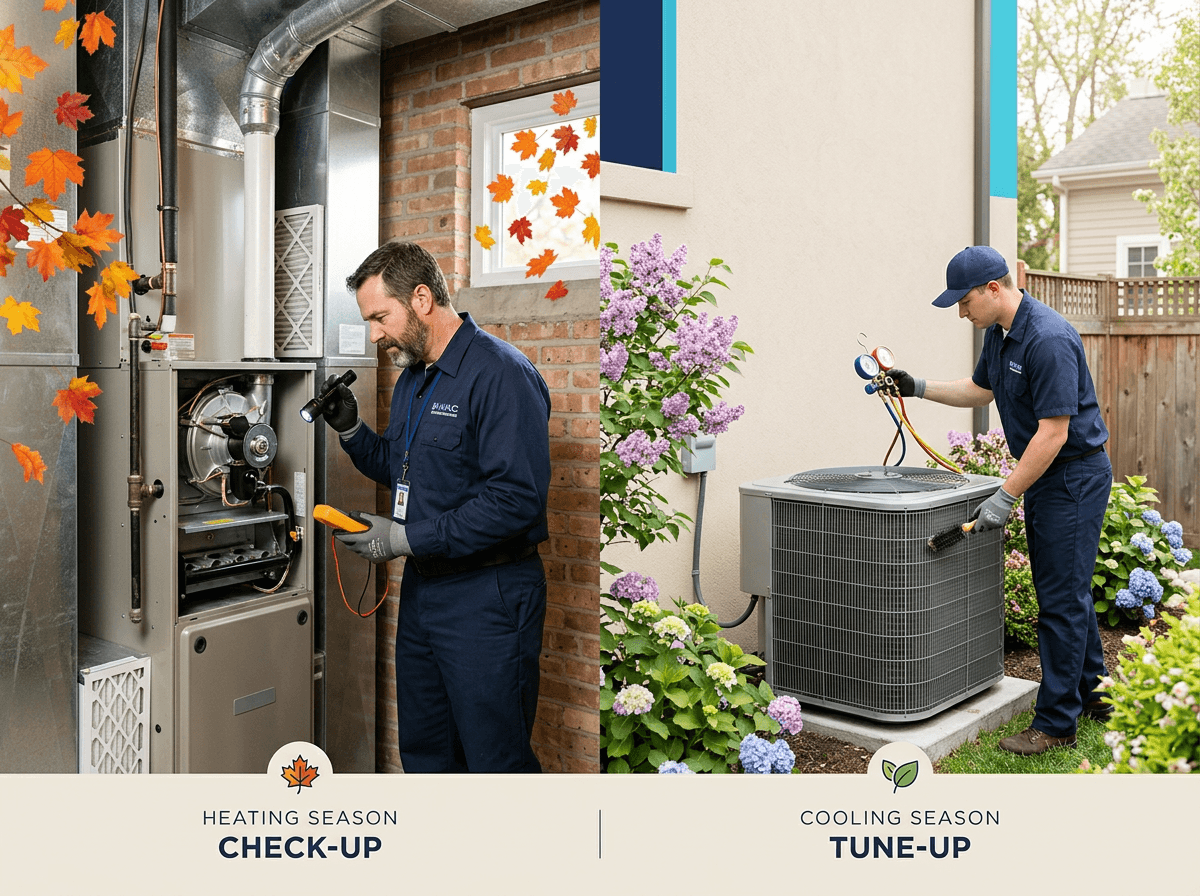
We recommend two visits a year: your furnace or heat pump in the fall before heating season, and your air conditioner in the spring before cooling season. Heat pumps run year-round, so twice-yearly service matters even more. Regular maintenance helps prevent breakdowns, keeps your system efficient, and supports your manufacturer warranty, since many warranties require documented annual service.
Where can I find my air filter, and how often should I replace it?
The short answer
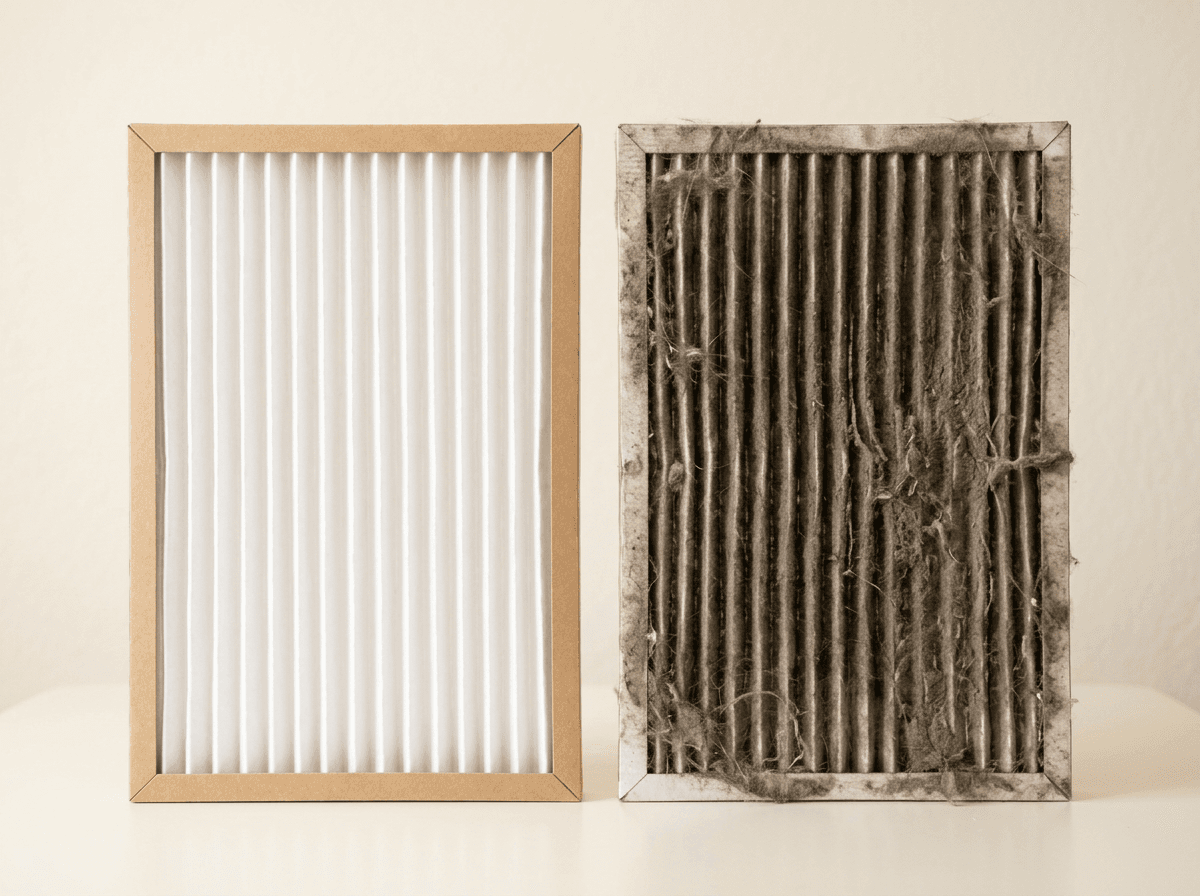
Most filters slide into a slot on the furnace or air handler where the return duct connects, or sit behind a large return-air grille on a wall or ceiling. Turn the system off, slide out the old filter, note the size printed on its edge, and insert the new one with the airflow arrow pointing toward the furnace. Replace 1-inch filters every 1 to 3 months and 4- to 5-inch filters every 6 to 12 months.
What forms of payment do you accept?
- Accepted: Visa, Mastercard, debit cards, cash, and personal checks
- How to pay: On-site when the job is finished, or through a secure payment link sent by text or email
- Installations: 50% down payment required
- Financing: Available with approved credit
- Diagnostic fee: $90 per unit, billed separately from any repair